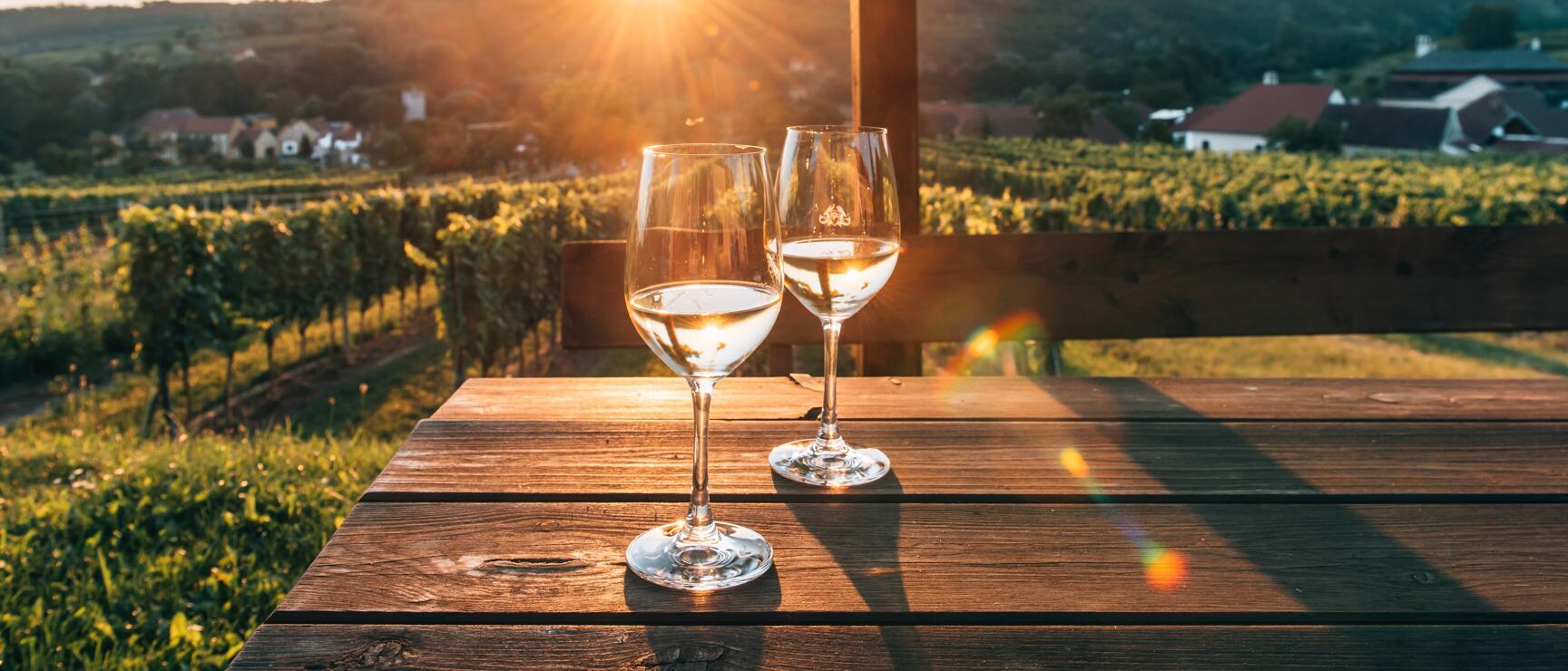
Wine in Austria: Vineyards, Themed Hikes & Wine Stays
Introduction
Austria may be best known for its mountain regions and imperial cities, but its wine culture is not to be overlooked: Across hills and river valleys, more than 46,000 hectares of vineyards produce wines that have become increasingly sought-after well beyond Austria’s borders, from Grüner Veltliner to the country’s rich red wines. And that’s just half the story: Vienna is one of the few major capitals in the world with a thriving wine-growing tradition within its city limits. A day in Austria’s wine country can mean everything from hiking between vineyards and tasting local varieties to mingling with the locals at a traditional Heuriger tavern with a glass of wine in hand.
Austria is a small but distinctive wine country
Austria’s wine landscape is shaped by a diverse mix of climates and terrains, from the warm, Pannonian influence of Burgenland in the very east to the cooler vineyards along the Danube and the steep hills of Styria. This variety allows a surprisingly broad range of wines to be produced within a relatively compact area. White grapes dominate the vineyards, making up around 73% of the total produce. Grüner Veltliner is Austria’s best-known wine, while Riesling, Welschriesling and Sauvignon Blanc are also popular. Among the reds, Zweigelt and Blaufränkisch are particularly characteristic.
In 2025, Austria produced 256 million litres of wine – 37% more than in 2024 and 11% more than the five-year average. Lower Austria (66,2 %), Burgenland (22,8%) and Styria (9,6%) are Austria’s main wine regions. Austrian wine exports were worth € 231.2 million in 2024, with 63.5 million litres exported – its value increased by roughly 61% since 2015.
Wine in the city: Vienna has 400 vineyards and 100 "Heurige"
A 2-million-strong city might not be the first destination to come to mind for wine tourism, but Vienna’s wine regions are among the best-known in the country. No other city in the world has more vineyards. There are approximately 400 in total, covering 700 hectares of land across the city. Historically, they were located around small villages on the outskirts of Vienna, which were then incorporated into the city in the early 20th century. Vienna’s vineyards produce about 20,000 hl of wine per year, with around 80 % white. Vienna’s signature blend is “Gemischter Satz“ (“mixed grape“), made from different grapes grown, harvested and processed together. The best places to visit the city vineyards are Nussberg, Kahlenberg, Bisamberg, Mauer and Ottakring.
And then there are the “Heurige“, traditional wine taverns often close to the grape fields that serve the local produce along with hearty Austrian snacks. The classic meal to order is a “Brettljause“, a wooden board piled with cold meats, cheeses, spreads, pickles and bread, designed to be shared alongside a glass of wine. Most of the taverns can be found in Döbling, particularly Nussdorf, Grinzing and Neustift am Walde.
From trail to tasting: Wine hiking in Austria
Holidaymakers wanting to take the nature and wine experience a step further can opt for one of the wine hikes across the country. These are typically scenic hikes with stops at local winemakers along the way or a glass of local vino waiting at the finish line.
One of the most popular destinations for wine hiking is Styria in southeastern Austria. When visiting the Graz region, you literally have the Southern Styrian wine country at your doorstep, just waiting to be explored. Three different wine trails, 25 to 70 km in length, will take you to the region’s most picturesque vineyards with plenty of postcard-perfect views and tasting opportunities at vineyards and Buschenschänke (wine taverns) en route.
Other local favourites are the Wachau region and the Weinviertel (literally “wine district“) in Lower Austria, 60-90 minutes from Vienna. The Wachau region has some serious hikes with steep terraced vineyards overlooking the Danube River, historic villages and castle ruins, including the 180 km long Wachau World Heritage Trail (not solely focused on wine, but you’ll pass plenty of vineyards). For a more leisurely experience, pick one of the shorter wine-themed trails, e.g. around Spitz. The Weinviertel region is all about relaxed walks through vineyards and beautiful Kellergassen (historic wine-cellar lanes). There are also special wine cycling routes.
Hotels for wine lovers
Wine-loving travellers will also find hotels dedicated to their passion. Loisium has two hotels amidst the wine regions, one in Langenlois, Lower Austria, and one in Ehrenhausen, Southern Styria. The Langenlois hotel stands out with its own Wine World, where guests can learn all about wine growing in an up to 900 year old wine cellar. Its Styrian counterpart is especially beloved for its spa experiences, such as a day package combining wellness and a multi-course dinner paired with local wines selected by their in-house sommelier.
Hotel Dürnstein, a luxury Baroque castle hotel sitting in the Wachau region, offers wine tastings in its over 400-year-old historic wine cellar, featuring local favourites alongside rare international vintages. Hotel Das Central in Sölden hosts the annual Wein am Berg Festival (“Wine on the mountain festival“) where top sommeliers meet award-winning chefs, and is home of one of Austria’s largest wine cellars with over 30,000 bottles.
Photos and full press release available below.
Please credit all photos accordingly and use images exclusively in connection with the featured destination/location.

Get our news right into your inbox.
Download the full press release here.
Vineyards of Wachau
© Austrian National Tourist Office / Cross Media Redaktion
Brettljause (food platter) at Heuriger Mayer on Pfarrplatz - tradition-steeped winery in Beethoven's home
© Austrian National Tourist Office / Christian Kremser
Vineyards South Styria
© Austrian National Tourist Office / Andreas Tischler
Enjoyment in the LOISIUM WineWorld
© Loisium
Winegrowing area Falkenstein in the Weinviertel
© Austrian National Tourist Office / Robert Herbst
Grape Harvest
© Austrian National Tourist Office / Andreas Tischler
Hotel Schloss Dürnstein in the Wachau valley
© Hotel Schloss Dürnstein GmbH
Wine from the south of Styria
© Austrian National Tourist Office / Harald Eisenberger
Southern Styria Wine Road
© Austrian National Tourist Office / Julius Silver